
1747–1830
Dorothy Quincy
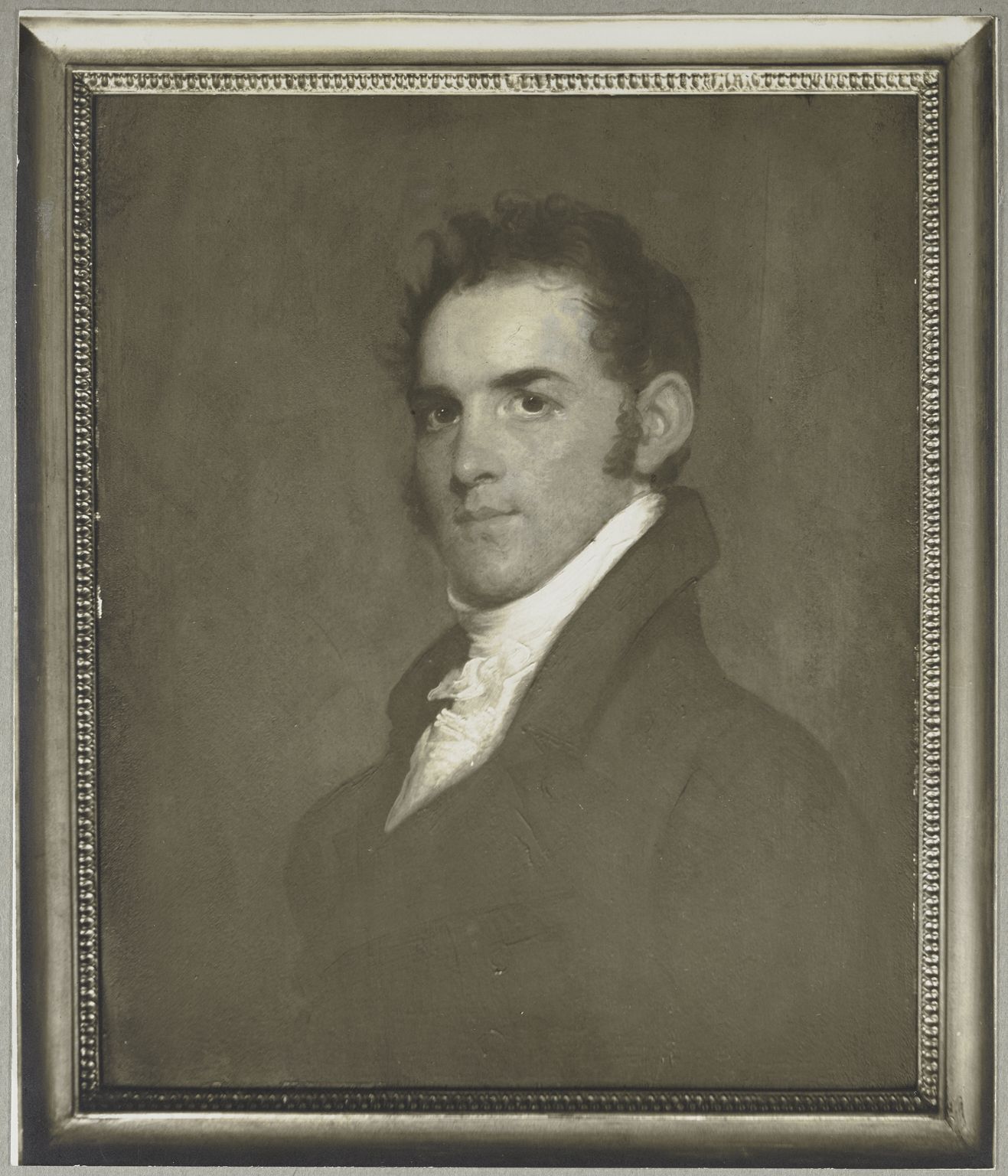
Gilbert Stuart, 1813
Biography
Dorothy Quincy (1747–1830)
Witness to the Revolution's First Hours
Born in 1747 to one of Boston's prominent merchant families, Dorothy Quincy grew up in a world of colonial privilege, social standing, and increasing political tension. Her father, Edmund Quincy, was a wealthy magistrate connected to the networks of patriot leadership that would eventually ignite a revolution. It was through these intertwined circles of elite Massachusetts society that Dorothy came to know John Hancock, the wealthiest man in New England and an increasingly vocal critic of British authority. By the spring of 1775, the two were engaged, and Dorothy's life had become inseparable from the dangerous currents of revolutionary politics. She was not a political figure in her own right—no woman of her era could be, in any formal sense—but she inhabited the innermost rooms where the Revolution was being planned, debated, and risked. When Hancock traveled to Lexington in April 1775 to stay at the Hancock-Clarke House, the parsonage of Reverend Jonas Clarke, Dorothy accompanied him. She could not have known that she was walking directly into the opening scene of the American war for independence.
On the night of April 18, 1775, Dorothy Quincy was inside the Hancock-Clarke House when Paul Revere arrived on horseback with his urgent warning: British regulars were marching from Boston, and both Hancock and Samuel Adams were believed to be targets for arrest. What followed was a scene of tension, argument, and decision that Dorothy witnessed firsthand. Hancock, by multiple accounts, wanted to stay and take up arms alongside the militiamen gathering on Lexington Green. Adams argued strenuously that their value to the cause lay in political leadership, not battlefield heroics. Dorothy watched this debate unfold in the crowded parsonage, surrounded by family members, hosts, and armed guards. Before dawn on April 19, she departed with the escape party—Hancock, Adams, Hancock's aunt Lydia, and others—fleeing toward the town of Woburn and then farther into the countryside as the first shots of the Revolution rang out behind them. Her role was not that of a soldier or a strategist. She was a witness, swept into flight by circumstances shaped entirely by the men around her, yet physically present at one of the most consequential moments in American history.
The human stakes for Dorothy Quincy were real, even if they have been largely overlooked. She was engaged to a man the British government considered a dangerous criminal—a smuggler, agitator, and ringleader whose arrest could have meant imprisonment or worse. By being at the Hancock-Clarke House that night, Dorothy shared in the physical danger that Revere's midnight ride was meant to avert. Had the British column arrived before the escape party departed, her fate would have been entangled with Hancock's in unpredictable ways. Beyond that immediate peril, Dorothy faced the broader uncertainties that confronted every woman connected to the patriot cause: the possibility of property confiscation, social ruin, and the collapse of the world she had known. She was not fighting for abstract principles of liberty—she was navigating a crisis that threatened everything personal and immediate in her life. Four months later, in August 1775, she married Hancock, binding herself permanently to the revolutionary cause and to a man whose signature on the Declaration of Independence would make him one of the most recognizable figures in American history. Her commitment was quiet, but it was total.
Dorothy Quincy's legacy resists easy summary precisely because the historical record has left her nearly voiceless. We know she was present at the Hancock-Clarke House. We know she fled before the battle. We know she married Hancock, bore children, served as the wife of a governor, and outlived her famous husband by nearly four decades, dying in 1830 at the age of eighty-three. What we do not know—what the archives have not preserved—is what she thought, what she felt, or how she understood the events that swirled around her. This silence is itself historically significant. Dorothy Quincy represents the countless women of the Revolution who were present at decisive moments, who bore real risks, and who shaped the domestic and social fabric that sustained the patriot movement, yet whose voices were never recorded or have not survived. To study her is to confront the incompleteness of our national story. She stands not as a footnote to John Hancock's biography but as a reminder that history is always larger than the testimony it preserves, and that presence without recorded voice is not the same as absence.
WHY DOROTHY QUINCY MATTERS TO LEXINGTON
Dorothy Quincy's story transforms the Hancock-Clarke House from a site of political drama into a fully human space—a place where women, families, and personal relationships collided with revolutionary crisis. When students and visitors stand in that parsonage today, they should understand that on the night of April 18, 1775, this was not merely a meeting room for patriot leaders. It was a household, and Dorothy was part of it. Her presence reminds us to ask who else was in the room when history happened—whose experiences went unrecorded, whose fears and choices shaped events without earning a line in the official accounts. The Revolution was not made only by the men who signed documents and commanded troops. It was lived by people like Dorothy Quincy, and Lexington is where her story begins.
TIMELINE
- 1747: Born in Boston, Massachusetts, to Edmund Quincy and Elizabeth Wendell Quincy
- 1772: Becomes engaged to John Hancock, one of the wealthiest and most prominent patriot leaders in Massachusetts
- April 18–19, 1775: Present at the Hancock-Clarke House in Lexington when Paul Revere delivers his warning of approaching British troops
- April 19, 1775: Departs with Hancock, Adams, and others in a pre-dawn escape from Lexington before the battle on the Green
- August 28, 1775: Marries John Hancock in Fairfield, Connecticut
- 1776: Husband signs the Declaration of Independence as President of the Continental Congress
- 1780–1785: Serves as wife of the first Governor of Massachusetts during Hancock's initial gubernatorial tenure
- 1793: John Hancock dies in office as Governor of Massachusetts
- 1796: Marries Captain James Scott, a family friend
- 1830: Dies on February 3 in Boston at the age of eighty-three
SOURCES
- Fischer, David Hackett. Paul Revere's Ride. Oxford University Press, 1994.
- Unger, Harlow Giles. John Hancock: Merchant King and American Patriot. John Wiley & Sons, 2000.
- Lexington Historical Society. The Hancock-Clarke House. https://www.lexingtonhistory.org/hancock-clarke-house
- Baxter, W. T. The House of Hancock: Business in Boston, 1724–1775. Harvard University Press, 1945.
- Tyler, John W. Smugglers & Patriots: Boston Merchants and the Advent of the American Revolution. Northeastern University Press, 1986.
In Lexington
Apr
1775
Hancock and Adams Warned at Clarke HouseRole: Witness
# Hancock and Adams Warned at Clarke House In the tense spring of 1775, the relationship between the American colonies and the British Crown had reached a breaking point. For years, men like Samuel Adams and John Hancock had been at the forefront of colonial resistance, organizing protests, rallying public opinion, and building the political infrastructure of rebellion. Adams, a tireless political organizer from Boston, had spent decades cultivating networks of opposition to British taxation and imperial overreach. Hancock, a wealthy merchant and prominent politician, had used his fortune and influence to support the Patriot cause. Together, they represented the intellectual and political heart of the revolutionary movement in Massachusetts. By April of 1775, British authorities in Boston considered them among the most dangerous men in the colonies, and there was widespread belief that General Thomas Gage, the royal military governor, had issued orders for their arrest. In the days leading up to April 19, Hancock and Adams had traveled to Lexington, where they were staying as guests at the home of Reverend Jonas Clarke, a local minister whose parsonage—often called the Hancock-Clarke House—served as a gathering place for Patriot sympathizers. Their presence outside of Boston was not unusual; the Provincial Congress had been meeting in Concord, and the two men had business in the area. However, intelligence had been filtering through Patriot networks that British regulars were preparing to march out of Boston, likely with the dual purpose of seizing military supplies stored in Concord and capturing Adams and Hancock themselves. The Sons of Liberty and other organized groups had established an elaborate warning system to alert the countryside in the event of such a march, and Paul Revere, a skilled Boston silversmith who had become one of the most trusted couriers in the Patriot communication network, was at the center of that system. Shortly after midnight on April 19, Revere arrived at the Hancock-Clarke House on horseback, having already crossed the Charles River and ridden through the darkened countryside to deliver his urgent warning. Outside the house, Sergeant William Munroe stood guard with a small detail of militiamen, already aware that the situation was precarious. When Revere approached, Munroe told him not to make so much noise, as the household had retired for the evening. Revere's response has become one of the memorable exchanges of that fateful night: he declared that noise was exactly what was needed, for the British regulars were coming. His warning electrified the household and set in motion a series of decisions that would prove critical to the survival of the revolution's leadership. Inside the Clarke house, reactions to the news varied. John Hancock, by several accounts a man of considerable personal courage, reportedly expressed his desire to remain in Lexington and take up arms alongside the local militia. It was Samuel Adams who intervened with cooler reasoning, persuading Hancock that their roles as political leaders were far too important to risk in a skirmish. The revolution needed their minds, their voices, and their organizational abilities more than it needed two additional muskets on the green. Dorothy Quincy, Hancock's fiancée and a witness to the unfolding drama, along with Hancock's elderly Aunt Lydia Hancock, helped prepare for the hurried departure, gathering essentials as the household scrambled to respond to the crisis. By the time the column of British regulars reached Lexington Green in the gray light of early morning, Adams and Hancock were already well on their way toward the relative safety of Woburn. Their escape ensured that two of the revolution's most important figures would survive to continue their work. Adams would go on to help shape the political arguments for independence, while Hancock would serve as president of the Continental Congress and become the first to sign the Declaration of Independence. Had they been captured or killed that night, the course of the American Revolution might have been profoundly altered. The warning at the Clarke house was not merely a dramatic episode; it was a pivotal moment that preserved the leadership the colonies desperately needed as they moved from resistance to open war.