

About This Project
History is for Everyone
A public-good research network covering America's Revolutionary towns — built for travelers, teachers, and the towns themselves.
Who I Am
Sabrina Bhattacharjya
I'm Sabrina Bhattacharjya, a 15-year-old from Lexington, Massachusetts — the town where the American Revolution began on April 19, 1775. I'm the founder of History Is For Everyone, a platform connecting 75+ Revolutionary War towns for teachers, tourists, and the communities that shaped the Revolution. I also run lexington250.com, a hub for Revolutionary War history with original writing, tourism guides, and merchandise sold at Buckman Tavern. I'm also the author of The Midnight Writer, a children's picture book about Elizabeth Clarke — a 12-year-old eyewitness to the Battle of Lexington — and my work has been covered by the New York Times, the BBC, and iHeart Radio.
To learn more about Sabrina Bhattacharjya, visit her website at sabrinachandini.com.
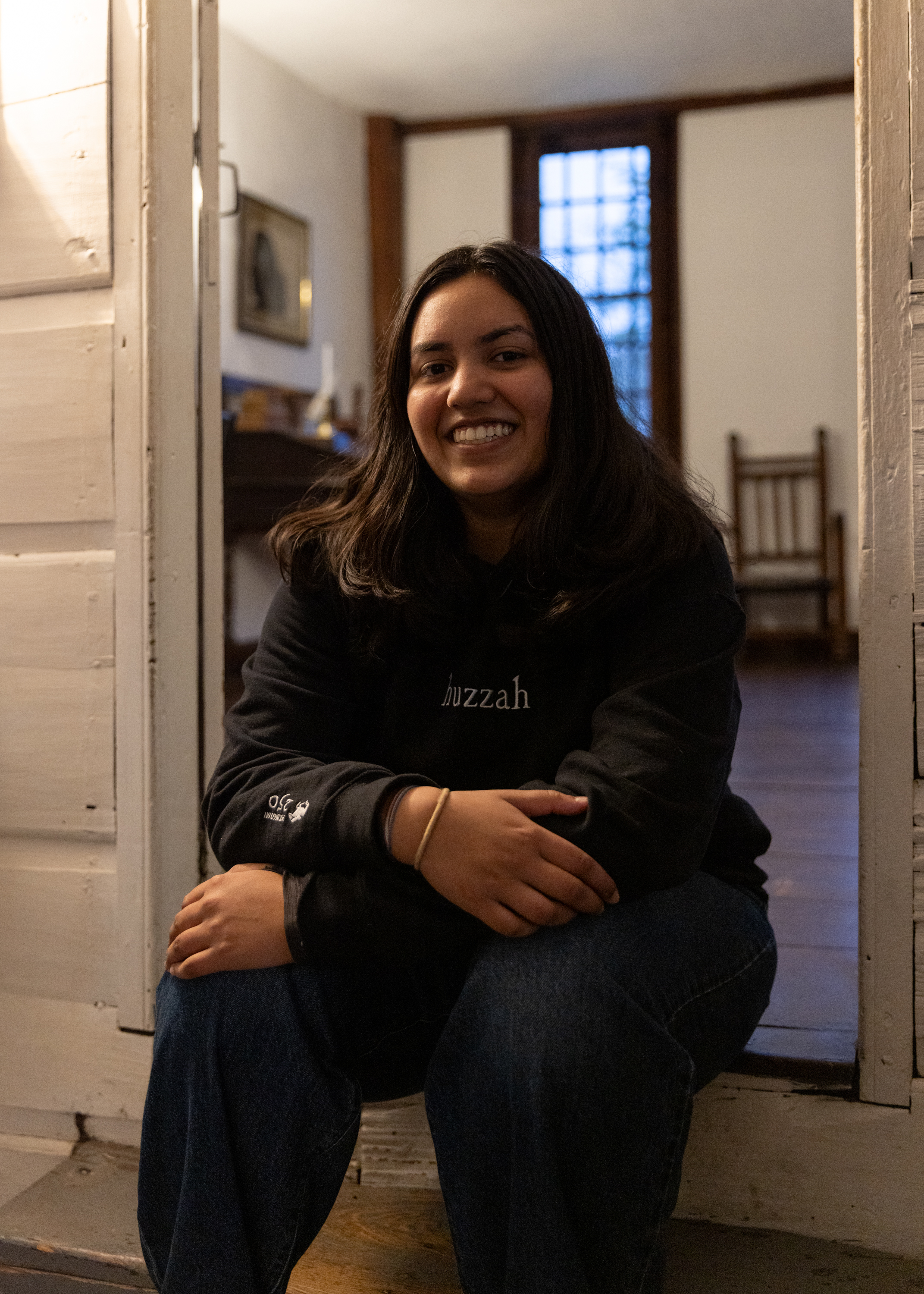
Sabrina at a Revolutionary War site
Origin
Why this exists
Most of the towns that shaped the American Revolution have never been documented well enough for a visitor to plan a meaningful trip, or for a teacher to build a real lesson. The famous sites get the attention, the funding, and the shelf space. The rest — Guilford Courthouse, Kaskaskia, Beaufort — sit quietly with real history and almost no usable record of it.
We started by mapping the towns that played a documented role in the Revolution across 13 colonies. For each one, we researched the events, the people, the places, the primary sources, and the connections to other towns. We scored them across seven dimensions so that a teacher in Ohio or a tourist planning a road trip could actually compare them.
The goal is not a finished encyclopedia. It is a living research network that gets better as more people engage with it — and that makes the history usable for everyone, not just the towns that already appear on every map.
Guide
How to use this
For travelers
Browse the town network to find communities with a strong preservation score, accessible battlefields, and stories that connect to the bigger arc of the war. Use the network map to see how they connect. Every town page links to real places, documented events, and the people who were there.
For teachers
Every town in the network has lesson plans aligned to state standards, curated primary source packets with guided analysis prompts, and ready-to-use quizzes. Students learn to read original documents, weigh conflicting accounts, and understand how the same event looked different from different towns. Visit the Teach section to browse by state or town.
For towns and organizations
Every town in the network has a researched public profile at no cost — events, people, places, stories, and sources. Communities that want a deeper presence can join the partnership program, which adds analytics, custom editorial collaboration, and a deeper organizational voice in how their town's story is told. The core history remains open regardless.
Values
What we believe
History belongs to every community that made it.
Not just the towns with the biggest endowments or the most familiar names. Ticonderoga and Trenton and Guilford Courthouse and Ninety Six — all of them matter, and all of them deserve to be documented well.
Uncertainty is honest.
We label every claim with a confidence level. Verified, oral tradition, anecdotal, unverified — readers deserve to know the difference. When we don't know something, we say so.
Teachers are the real audience.
A well-built lesson plan turns a date and a battle into something a student actually understands and remembers. We build every profile with teachers in mind first.
Start Exploring.