
1748–1828
William Few
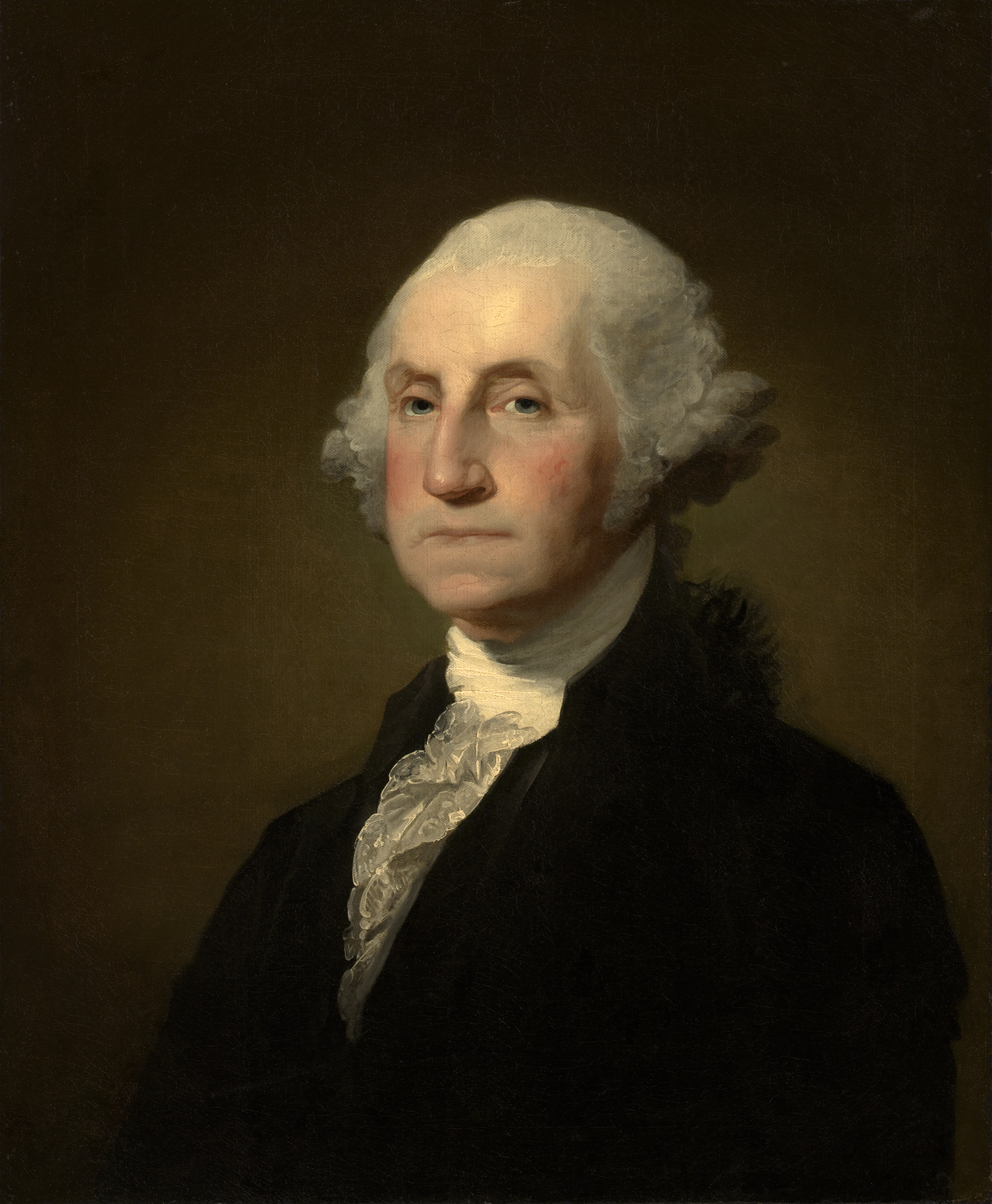
Gilbert Stuart, 1803
Biography
William Few: From the Carolina Backcountry to the Constitution
Born in 1748 in Baltimore County, Maryland, the man who would become one of Georgia's most consequential founding figures grew up far from the corridors of power. The Few family moved to North Carolina during his childhood, settling among the struggling farmers and frontier families who eked out livings on land where colonial authority often meant exploitation rather than protection. This was not an abstract concern for the Fews. William's brother James was hanged in the aftermath of the Regulator uprising of 1771, a violent collision between backcountry settlers and a colonial government they viewed as corrupt, distant, and predatory. That execution seared into William Few a visceral understanding of what unchecked governmental power could do to ordinary people. When the family relocated again, this time to Georgia, the young man settled near Augusta and threw himself into the study of law. He possessed no inherited wealth or social connections of consequence, but the frontier legal community rewarded energy, intelligence, and grit. By the mid-1770s, Few had established himself as a respected attorney and emerging civic leader in the Augusta area, perfectly positioned to channel his family's bitter experience with authority into the gathering movement for American independence.
Entry into the Revolutionary Cause
Few's entry into revolutionary politics in Georgia was swift and seemingly inevitable, given both his personal history and his growing reputation in the Augusta backcountry. Georgia was the youngest, smallest, and most vulnerable of the thirteen colonies, with a population heavily dependent on trade with Britain and a frontier constantly threatened by Creek and Cherokee nations. The patriot movement there developed more slowly and cautiously than in New England or Virginia, but men like Few helped push the colony toward open resistance. He became active in Georgia's provincial congress and aligned himself firmly with those who believed that accommodation with the Crown was neither possible nor desirable. His legal training gave him the ability to draft resolutions, argue cases for independence, and build institutional frameworks for a state that barely had functioning institutions to begin with. By the time fighting erupted in earnest, Few had already demonstrated the combination of practical skill and ideological commitment that would define his wartime career. He was elected repeatedly to the Continental Congress, serving as one of Georgia's representatives during some of the most precarious years of the war, when it was far from certain that the new state would survive at all.
Military and Legislative Service in a Fractured State
Few's most important contribution during the Revolution lay in his extraordinary ability to serve simultaneously as a military officer and a legislative leader, holding together a state that was, by any reasonable measure, falling apart. As a colonel of Georgia militia, he took the field during the years when British forces occupied Savannah and controlled much of the coastal lowcountry, leaving the patriot government clinging to survival in the interior. This was not the gentleman-officer service of Virginia planters commanding well-supplied Continental regiments; it was desperate, improvised frontier warfare against British regulars, Loyalist partisans, and Native American raiders. Few fought in skirmishes and defensive actions while simultaneously attending sessions of the Continental Congress in Philadelphia, traveling hundreds of miles through dangerous territory to fulfill both obligations. His willingness to shoulder this dual burden reflected a harsh reality of the southern war: Georgia simply did not have enough capable leaders to spare anyone from either military or political duty. Few understood that winning battles meant nothing if the political structures of the state collapsed, and that legislative resolutions were meaningless if no one defended the territory where they were supposed to apply. He embodied the fusion of sword and pen that kept Georgia in the war.
The Darkest Years and the Road to Recovery
The specific turning points of Few's wartime experience were shaped by the broader catastrophe that engulfed Georgia between 1778 and 1782. After the British captured Savannah in December 1778 and defeated an American attempt to retake the city in the siege of October 1779, Georgia became a battleground of brutal partisan conflict. The legitimate state government was driven from its capital and forced into a peripatetic existence, meeting wherever safety permitted, sometimes barely able to assemble a quorum. Few was among those who kept that government alive through sheer persistence, attending legislative sessions in Augusta and other backcountry locations even as Loyalist and British forces threatened to overrun the region entirely. When Augusta itself fell to British forces under Lieutenant Colonel Thomas Brown in 1780, the patriot cause in Georgia reached its nadir. Few participated in the slow, grinding effort to reclaim the backcountry, supporting the militia campaigns that eventually led to the recapture of Augusta in June 1781. Through these desperate years, he helped rebuild the institutions of civil governance — courts, tax collection, land administration — that gave the recovering state some semblance of legitimacy and order as patriot forces gradually pushed the British back toward Savannah.
Relationships and Influence Among Georgia's Revolutionary Leaders
Few operated within a small but consequential circle of Georgia patriots who collectively steered the state through the Revolution and into the new constitutional order. His closest political association in the national arena was with Abraham Baldwin, a Connecticut-born Yale graduate who had settled in Georgia and who shared Few's commitment to building viable institutions in a state that had nearly been destroyed by war. Together, they represented Georgia at the Constitutional Convention in Philadelphia in 1787, and together they signed the finished document — the only two Georgians to do so. Their partnership illustrated how Georgia's revolutionary leadership drew from diverse backgrounds: Few the self-taught frontier lawyer from a family of displaced farmers, Baldwin the New England-educated intellectual who had chosen the South. Few also worked alongside figures like Lyman Hall, Button Gwinnett, and George Walton, Georgia's three signers of the Declaration of Independence, though those relationships were sometimes complicated by the fierce factional politics that plagued the state throughout the war. His ability to navigate those factions, maintaining credibility with backcountry militia leaders and lowcountry political elites alike, was essential to his longevity in Georgia's turbulent political landscape.
Legacy: What Few's Story Reveals About the Revolution
The arc of Few's life after the Constitution's ratification was as remarkable as anything that preceded it. He served as one of Georgia's first two United States senators, then relocated to New York City around 1799, where he reinvented himself as a banker, served in the New York state legislature, and was appointed to a federal judgeship. He died in 1828 in Fishkill, New York, far from the Augusta frontier where he had built his revolutionary career. His trajectory — from the son of a displaced Maryland farming family to a North Carolina Regulator's brother to a Georgia militiaman to a signer of the Constitution to a New York financial figure — encapsulates the social mobility that the Revolution made possible for men of ability and determination who lacked the advantages of birth. Few's story also reminds us that the Revolution was not only fought and won in the celebrated theaters of New England and the mid-Atlantic. In Georgia, the war was rawer, more chaotic, and more existentially threatening than almost anywhere else, and it was men like Few who kept the flame of self-governance alive when it nearly flickered out entirely. His signature on the Constitution represented not just a political act but the survival of an entire state's experiment in independence.
WHY WILLIAM FEW MATTERS TO AUGUSTA
William Few's story matters to Augusta because it reveals what the Revolution actually looked like on Georgia's frontier — not a triumphant march toward independence, but a desperate, years-long struggle to keep a fragile state from being extinguished entirely. Few built his legal career and political reputation in the Augusta area, fought to defend it as a militia colonel, and watched it fall to the British before helping to reclaim it. When he traveled to Philadelphia in 1787 to sign the Constitution, he carried with him the hard-won experience of a man who had seen self-government nearly destroyed and understood, from personal sacrifice, what it cost to preserve. For students and visitors exploring Augusta's revolutionary heritage, Few embodies the resilience that kept Georgia in the fight.
TIMELINE
- 1748: Born in Baltimore County, Maryland
- c. 1758: Family relocates to North Carolina
- 1771: Brother James Few executed following the Regulator uprising in North Carolina
- c. 1773: Moves to Georgia, settling near Augusta; begins reading law
- 1776–1778: Becomes active in Georgia's revolutionary government and provincial congress
- 1780–1782: Serves as colonel of Georgia militia during the British occupation of the state
- 1780–1788: Serves multiple terms as Georgia delegate to the Continental Congress and Congress of the Confederation
- 1787: Attends the Constitutional Convention in Philadelphia; signs the U.S. Constitution alongside Abraham Baldwin
- 1789–1793: Serves as one of Georgia's first two United States senators
- 1799: Relocates to New York City; begins career in banking and public service
- 1828: Dies in Fishkill, New York
SOURCES
- Skemp, Sheila L. "William Few." In American National Biography. Oxford University Press, 1999.
- Few, William. "Autobiography of Col. William Few of Georgia." Magazine of American History, Vol. 7, No. 5, 1881.
- Cashin, Edward J. The King's Ranger: Thomas Brown and the American Revolution on the Southern Frontier. University of Georgia Press, 1989.
- National Archives. "America's Founding Fathers: Delegates to the Constitutional Convention — William Few." https://www.archives.gov/founding-docs/founding-fathers-georgia#Few
- Coleman, Kenneth. The American Revolution in Georgia, 1763–1789. University of Georgia Press, 1958.