NH, USA
New Castle
The Revolutionary War history of New Castle.
Why New Castle Matters
New Castle, New Hampshire
New Castle sits on a small island at the mouth of the Piscataqua River, guarding the entrance to Portsmouth Harbor. Settled in 1623, an earthwork defense was built on Fort Point, which would evolve into Fort William and Mary.
Originally known as "The Castle," the fort was renamed Fort William and Mary circa 1692, after the accession of William III and Mary II to the British throne.
By 1774, it was the only permanently occupied military post in New Hampshire.
The Raids on Fort William and Mary
On October 19, 1774, King George III issued a confidential Order in Council forbidding the export of arms and powder to America.
Tensions in Massachusetts had nearly erupted into violence during the so-called Powder Alarm that fall, and upon learning of the Order in Council, patriots feared that the British would make another attempt to seize colonial stores.
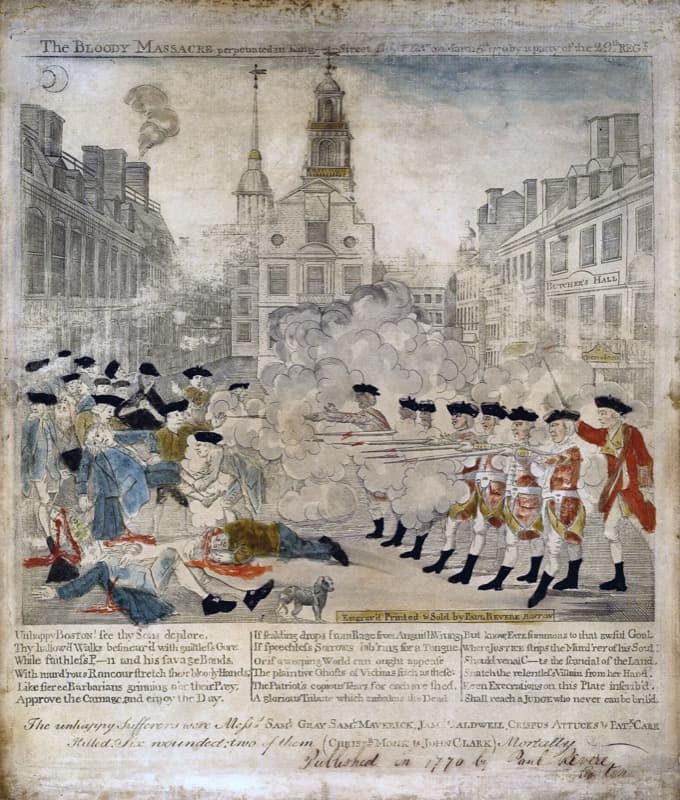
On December 13, 1774, the Boston silversmith Paul Revere made a midday gallop north to Portsmouth in the province of New Hampshire — a ride set off by intelligence that the British planned to reinforce the fort, and one that would prove to be among the catalysts for the first overt acts of the American Revolution.
Couriers bearing news of the attack circulated through the New Hampshire countryside and recruited volunteers.
On December 14–15, 1774 — four months before Lexington — New Hampshire patriots raided the British garrison at Fort William and Mary on New Castle island in two successive actions. The first raid, on December 14, was led by John Langdon, a Portsmouth merchant who marched through the streets, led by fifes and drums, loudly proclaiming the plan to seize the powder at Fort William and Mary.
Several hundred men responded to his call, setting out for the Castle by way of the Piscataqua River; only one provincial officer, Captain John Cochran, and five provincial soldiers were stationed at Fort William and Mary.
The colonists arrived aboard gundalows — flat-bottomed sailing barges — and raided the fort.
Langdon's volunteers not only broke open the powder house and absconded with about 100 barrels of gunpowder but, to three cheers, hauled down the fort's British flag.
This is believed to have been the first time Americans lowered the British flag at a fort in the colonies.
The following day, December 15, 1774, additional rebel forces, led by John Sullivan and Major Alexander Scammell, arrived at the fort. This second raid resulted in the capture of military supplies and 16 cannons marked as the property of the King.
Scammell was a member of the raiding party, and tradition holds it was he who pulled down the British flag flying over the fort.
The supplies captured by patriots in December 1774 were later used by New Hampshire's forces against the British military, including in the Siege of Boston and at the Battle of Bunker Hill. Historian David Hackett Fischer characterized the clashes at New Castle as "truly the first blows of the American Revolution, four months before the battles of Lexington and Concord."
The incident is significant as one of the first overt acts of the American Revolutionary War and the only battle to take place in the state of New Hampshire.
Aftermath and the Fall of Royal Government
The next day, December 15, Governor Wentworth ordered 30 men to be enlisted for the defense of the fort, but no one volunteered for duty.
British Governor John Wentworth immediately sent for help from Boston, and the sloop Canceaux arrived on December 17, followed two days later by the frigate Scarborough.
In June 1775, Wentworth's personal safety was directly threatened when a mob of armed men surrounded his home.
He and his family fled under cover of darkness to Fort William and Mary, which lay under the protection of the Scarborough's guns.
The governor, with his wife and infant son, lived at the fort for two months before, on August 24, 1775, sailing for Boston.
Wentworth's departure marked the end of royal governance in New Hampshire.
Britain then abandoned the colony of New Hampshire to focus on the military situation in Massachusetts and relinquished control of the fort.
After the British abandoned the fort, the patriots probably renamed it Fort Hancock.
Notable Participants
John Langdon (1741–1819) — a politician from Portsmouth, New Hampshire, and one of the first two United States senators from that state.
He later served in the United States Congress for 12 years, including as the first president pro tempore of the Senate, before becoming president and later governor of New Hampshire.
He was a delegate to the Constitutional Convention and signed the U.S. Constitution as one of New Hampshire's representatives.
John Sullivan — Led the second raid on December 15, 1774. Sullivan was a member of the Congress of 1774 and 1775, and the following year he was appointed a brigadier general by that Congress.
Alexander Scammell (1747–1781) — Scammell studied law in the Durham, N.H., law office of John Sullivan and was with Sullivan during the raid on Fort William and Mary on Dec. 14, 1774.
During the raid, Scammell hauled down the British flag flying over the fort, the first patriot to do so, according to the New England Historical Society.
He was wounded on September 30, 1781, near Yorktown and died on October 6, making him the highest-ranking American officer killed during the Siege of Yorktown.
The Site Today
The site is now Fort Constitution Historic Site. Listed on the U.S. National Register of Historic Places (NRHP reference No. 73000169), the fort was added to the NRHP on July 9, 1973.
Fort Constitution was given to the State of New Hampshire by the American military in 1961 and converted into a state park. A plaque at the site reads: "In commemoration of the first victory of the American Revolution. The capture, on this site of Fort William and Mary, 14–15 December 1774."