NY, USA
New York City
The Revolutionary War history of New York City.
Why New York City Matters
New York City in the Revolution: Battleground, Prison, and Birthplace of a Nation
Few American cities bore the weight of the Revolutionary War as heavily, or as long, as New York. From the summer of 1776, when George Washington's Continental Army suffered its most devastating defeat on the fields of Brooklyn, to November 1783, when the last British soldiers sailed out of the harbor on what New Yorkers would celebrate for generations as Evacuation Day, the city endured more than seven years of enemy occupation — longer than any other place in the thirteen colonies. New York was not merely a backdrop to the Revolution; it was a strategic prize, a killing ground, a nest of spies, and ultimately the stage on which the new republic announced itself to the world. To understand the American Revolution without understanding what happened in New York is to read only half the story. Nearly one-third of all the engagements fought during the Revolutionary War were fought in New York , and the city itself was at the center of that maelstrom.
The British recognized what Washington also understood: whoever controlled New York controlled the Hudson River, and whoever controlled the Hudson could sever New England from the rest of the colonies. Political and military leaders on both sides viewed the Hudson River Valley as the American jugular, which, if cut, would quickly bleed the rebellion to death. This geographic reality made the city the most strategically consequential piece of terrain on the continent. New York State was strategically important to both American and British forces during the American Revolution, because it contained the second largest city in North America, good harbors, and an excellent network of waterways to move troops and supplies on.
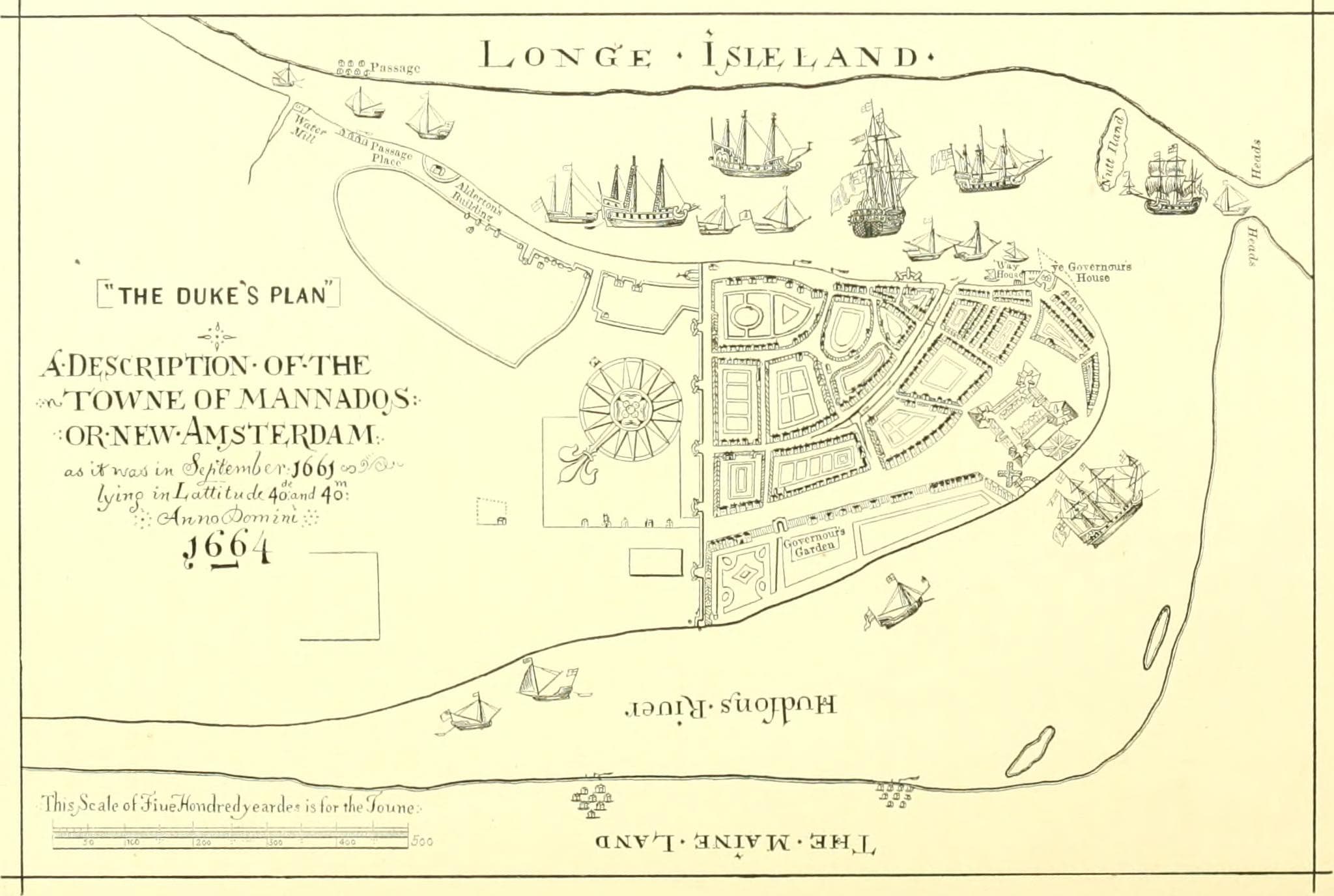
At the start of the Revolution, the city of New York was already an important center of business but had not yet become a sprawling metropolis — it occupied only the lower portion of Manhattan and had a population of approximately 25,000.
Before the war began, the Province of New York was politically divided, with active Patriot organizations and a colonial assembly that was strongly Loyalist.
In the spring and summer of 1776, Washington moved his army south from Boston, where he had successfully forced a British evacuation in March, to fortify Manhattan and the surrounding heights. He knew the British were coming. He began efforts to fortify the city before the British fleet sailed into New York Harbor, and these intensified during the summer of 1776. Fortifying Governors Island, located in the middle of the harbor, was one of his major efforts. He considered it "a very important post" because control of the island dictated control of the mouth of the East River. Essentially, Governors Island was integral to defending the entire east side of Manhattan as well as Brooklyn Heights. What he could not have fully anticipated was the scale of what arrived. In late June and throughout July, a massive British armada — more than four hundred ships carrying approximately 32,000 troops under General Sir William Howe, supported by his brother Admiral Richard Howe's naval forces — assembled in New York Harbor and on Staten Island. It was the largest expeditionary force Britain had ever sent abroad, and the sight of it filling the harbor must have been terrifying to the roughly 19,000 Continentals tasked with defending the city. The Americans were awed by the arrival of the British fleet in late June. One man remarked that it looked like "all London afloat."
Even before the battle was joined, New York became the setting for one of the Revolution's most electrifying symbolic acts. On July 9, 1776, after the Declaration of Independence was read to Washington's troops at the current site of City Hall, local Sons of Liberty rushed down Broadway to Bowling Green, where they toppled the statue of King George III. It was melted into two tons of metal and turned into 42,088 musket balls for George Washington's Continental Army.
The king's statue, composed of 4,000 pounds of lead, was a tempting storehouse of potential ammunition. The cast-iron fence surr
On August 22, 1776, British General William Howe landed his troops on Long Island. Using intelligence from Loyalists, the British marched through the unguarded Jamaica Pass and attacked the Americans from the rear.
The first shots of the Battle of Brooklyn were fired on August 26, 1776, aimed at two British soldiers rummaging around in a watermelon patch. The main engagement came the next day, August 27 — as the late historian David McCullough noted, it "had been the first great battle of the Revolution, and by far the largest battle ever fought in North America until then. Counting both armies and the Royal Navy, more than 40,000 men had taken part."
On the morning of August 27th, the British were advancing toward the main American camp on Brooklyn Heights. Realizing the dire American position, the American General, William Alexander, Lord Stirling, led a regiment of 400 Maryland soldiers against 2,000 British forces commanded by General Charles Cornwallis at the Old Stone House. The Marylanders fell, regrouped, and attacked again, but eventually their losses became too great to continue and Stirling finally surrendered.
The brave stand by the 400 Marylanders bought time for the rest of the army to fall back to Brooklyn Heights.
American casualties were devastating: an estimated 2,000 killed, wounded, or captured, against only 388 British losses.
Shortly after fighting began, the British had effectively cornered Washington and 9,000 of his men in Brooklyn Heights. Instead of surrendering, Washington made the decision that saved the Continental Army and the patriot cause — he evacuated the army and retreated to Manhattan.
Washington ordered a daring nighttime evacuation. Under cover of fog and silence, his army escaped to Manhattan without losing a single life. The British had won the battle and would hold New York for the rest of the war, but Washington's retreat preserved the Continental Army — and the Revolution.
What followed was a cascade of setbacks across Manhattan. On September 16, 1776, amid the setbacks of the New York campaign, Washington's army won a vital tactical success at the Battle of Harlem Heights in upper Manhattan. The clash came one day after the British landing at Kips Bay had sent many American troops retreating northward. It began as a skirmish involving Colonel Thomas Knowlton's Connecticut Rangers and British light infantry, then expanded as both sides committed reinforcements.
It was Washington's first battlefield victory of the war and, during the 1776 campaign, the first occasion on which Continental troops forced British regulars to yield ground. The result gave the battered army a badly needed recovery of confidence after the defeats on Long Island and at Kips Bay. Knowlton, later remembered as the "father of American military intelligence," was killed in the action. Washington wrote to Congress that the engagement "seems to have greatly inspired the whole of our troops."
Days later, on September 21, 1776, catastrophe struck the city itself. Just ten days after Washington and his Continental Army withdrew from New York and the British occupation began, a fire broke out on the West Side of Manhattan. It started at a local tavern but quickly spread — the wooden city lit up like kindling. The Patriot evacuation had left local forces in disarray, including the city's fire department. With no team assembled to fight the inferno, it continued to engulf the city. After igniting Trinity Church, the conflagration devoured over 500 houses.
By the next day, a quarter of Manhattan lay in ruins. Both sides accused the other of arson. Recent scholarship by historian Benjamin Carp concludes that American rebels torched New York in a coordinated effort to burn the city to the ground before the British could make full use of it.
In the weeks that followed, Redcoats swiftly arrested over 200 suspects and sympathizers.
The British never rebuilt the devastated quarter during their seven-year occupation.
The day after the Great Fire, on September 22, 1776, the city witnessed another indelible scene of the Revolution.