
1721–1783
John Hanson
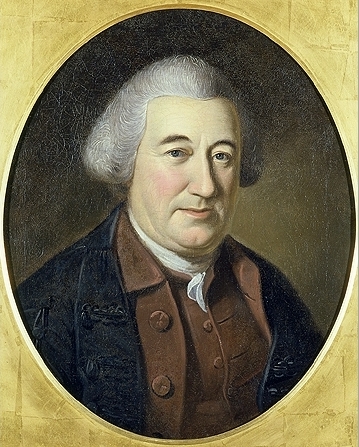
Charles Willson Peale, circ
Biography
John Hanson: First President Under the Articles of Confederation
Born in 1721 in Charles County, Maryland, the man who would one day be called the "first president" by his state's proudest boosters came from a family rooted in Maryland soil for three generations. The Hansons had established themselves as part of the colony's planter gentry, and young John followed the path that such families carved for their sons — managing tobacco lands, serving in county courts, and gradually climbing the ladder of colonial governance. His decades of experience in Maryland's local institutions gave him an intimate understanding of how government actually worked at the ground level, not as abstract theory but as the daily resolution of disputes, the collection of taxes, and the organization of public business. By the time the imperial crisis with Britain began to intensify in the 1760s and 1770s, Hanson was already a man in his fifties, well past the age at which most revolutionary careers were launched. Yet that maturity was precisely what made him valuable. He was not a firebrand or a pamphleteer but a man who understood institutions from the inside, who knew what it took to make committees function and legislatures produce results rather than mere resolutions.
Hanson's entry into the revolutionary struggle came not through dramatic acts of protest but through the quieter, more demanding work of keeping a colony functioning while it severed ties with its mother country. He served in the Maryland legislature during the war years, a position that required navigating the enormous practical challenges of supporting an army while maintaining civil order in a state that was itself politically divided. Maryland's contribution to the Continental cause depended on men like Hanson who could translate patriotic sentiment into actual appropriations — money, supplies, and soldiers sent to General Washington's chronically underfunded forces. His commitment to the cause was more than political abstraction: his own son served in the Continental Army, exposing the Hanson family to the same risks and anxieties that thousands of American families endured throughout the long conflict. This personal stake gave Hanson's legislative work an urgency that went beyond duty. He was not merely voting for requisitions in a distant assembly chamber; he was helping to sustain the army in which his child fought and might die.
Throughout the war years, Hanson worked persistently to ensure that Maryland fulfilled its obligations to the Continental Congress, a task that grew more difficult as the war dragged on and the states grew weary of endless demands for men and money. The Continental Congress had no power to compel state compliance — it could only request — and the willingness of individual states to honor those requests depended heavily on the persuasiveness and determination of their own legislators. Hanson proved himself effective in this role, pushing Maryland to maintain its support even when the war's outcome remained deeply uncertain. In 1779, he was elected as a delegate to the Continental Congress itself, arriving in Philadelphia at a critical juncture. The Congress was struggling to establish a more permanent governmental framework through the ratification of the Articles of Confederation, a process that had stalled for years over disputes about western land claims. Maryland was the last holdout, refusing to ratify until states with vast western land claims agreed to cede them for the common benefit. Hanson participated in the final resolution of this impasse, helping to bring his state into the fold.
The turning point of Hanson's career came on March 1, 1781, when Maryland's ratification completed the process and the Articles of Confederation finally went into effect, establishing the first formal government of the United States. The Congress reorganized under the Articles' terms, and on November 5, 1781 — just weeks after the stunning American victory at Yorktown — John Hanson was elected President of Congress, the first person to hold that office under the newly ratified framework. The timing was symbolically potent: the nation's first formal government began operating at almost the same moment that the war's decisive military victory was won. Hanson served in the role for one year, presiding over a Congress that faced the enormous challenges of managing the aftermath of Yorktown, negotiating with foreign powers, and attempting to govern thirteen fractious states through a governmental structure that gave the central authority almost no coercive power. His presidency was not glamorous, but it was consequential — the first test of whether the Articles could function as a governing document.
Hanson's relationships with his fellow delegates and with the broader network of revolutionary leaders shaped his effectiveness in ways that are difficult to reconstruct fully from the surviving record. As President of Congress, he corresponded with General Washington and worked alongside delegates from every state, presiding over debates that revealed both the promise and the deep structural weaknesses of the Articles of Confederation. His successor in the presidency would eventually include Thomas Mifflin, who would preside over Washington's famous resignation of his military commission in Annapolis in December 1783 — an event Hanson did not live to witness. Hanson's presidency connected him to the broader community of leaders who were trying to build national institutions from almost nothing, men who understood that winning independence on the battlefield was only the beginning and that governing a continental republic would require patience, compromise, and institutional creativity. He was not the most famous of these men, but he was among the first to occupy the formal structures they created together.
Hanson died in 1783, before the Constitution replaced the governmental framework he had helped inaugurate, and his legacy has been shaped ever since by the contested claim that he was the "first President of the United States." The claim is misleading if taken literally — the presidency created by the Constitution in 1787 was a fundamentally different office from the one Hanson held, with independent executive powers, a popular electoral mandate, and a role in the separation of powers that the Articles never envisioned. But dismissing the claim entirely misses its deeper significance. Hanson's election in November 1781 marked the moment when the United States first operated under a ratified, formal plan of government — imperfect and ultimately inadequate, but real. His story reminds us that the path from revolution to constitutional republic was not a single leap but a series of steps, each one an experiment in self-governance. The Articles of Confederation, for all their flaws, were the nation's first attempt to answer the hardest question the Revolution posed: not how to win independence, but how to govern once independence was won.
WHY JOHN HANSON MATTERS TO ANNAPOLIS
Annapolis served as the seat of Maryland's government and, for a brief period in 1783–1784, as the capital of the United States itself. Hanson represented Maryland at the highest level of national governance, and his story connects Annapolis directly to the founding moment of America's first formal government. Students and visitors walking the streets of Annapolis should understand that the Revolution was not only fought on battlefields — it was built in legislative chambers and committee rooms by men like Hanson who translated ideals into functioning institutions. His story teaches us that the path to the Constitution we know today ran through an earlier, imperfect experiment in national government, and that Maryland played a pivotal role in bringing that experiment to life.
TIMELINE
- 1721: Born in Charles County, Maryland, into an established planter family
- 1750s–1770s: Serves in Maryland's colonial courts and legislature, building decades of governance experience
- 1775–1779: Works in the Maryland legislature to support the Continental Army's requisitions during the Revolutionary War
- 1779: Elected as a delegate to the Continental Congress in Philadelphia
- 1781, March 1: Maryland ratifies the Articles of Confederation, completing the process and activating the first formal national government
- 1781, November 5: Elected first President of Congress under the Articles of Confederation
- 1782: Completes his one-year term as President of Congress
- 1783: Dies in Maryland, before the Constitution replaces the Articles of Confederation
SOURCES
- Seymour Wemyss Smith. John Hanson: Our First President. Brewer, Warren & Putnam, 1932.
- Herbert Friedenwald. The Continental Congress. Macmillan, 1902.
- Edmund Cody Burnett. The Continental Congress. Macmillan, 1941.
- National Archives. "Articles of Confederation (1777)." https://www.archives.gov/milestone-documents/articles-of-confederation
- Maryland State Archives. "John Hanson, President of Congress." https://msa.maryland.gov/msa/mdmanual/01glance/chron/html/chron17.html